
Sandy Springs, Georgia
Wedding Dress Alterations
A wedding dress is bought to a size chart and worn by a person. Closing that gap is the whole job: properly, invisibly, so the gown reads as though it was cut for you. Nina has been doing it in Atlanta since 1977.
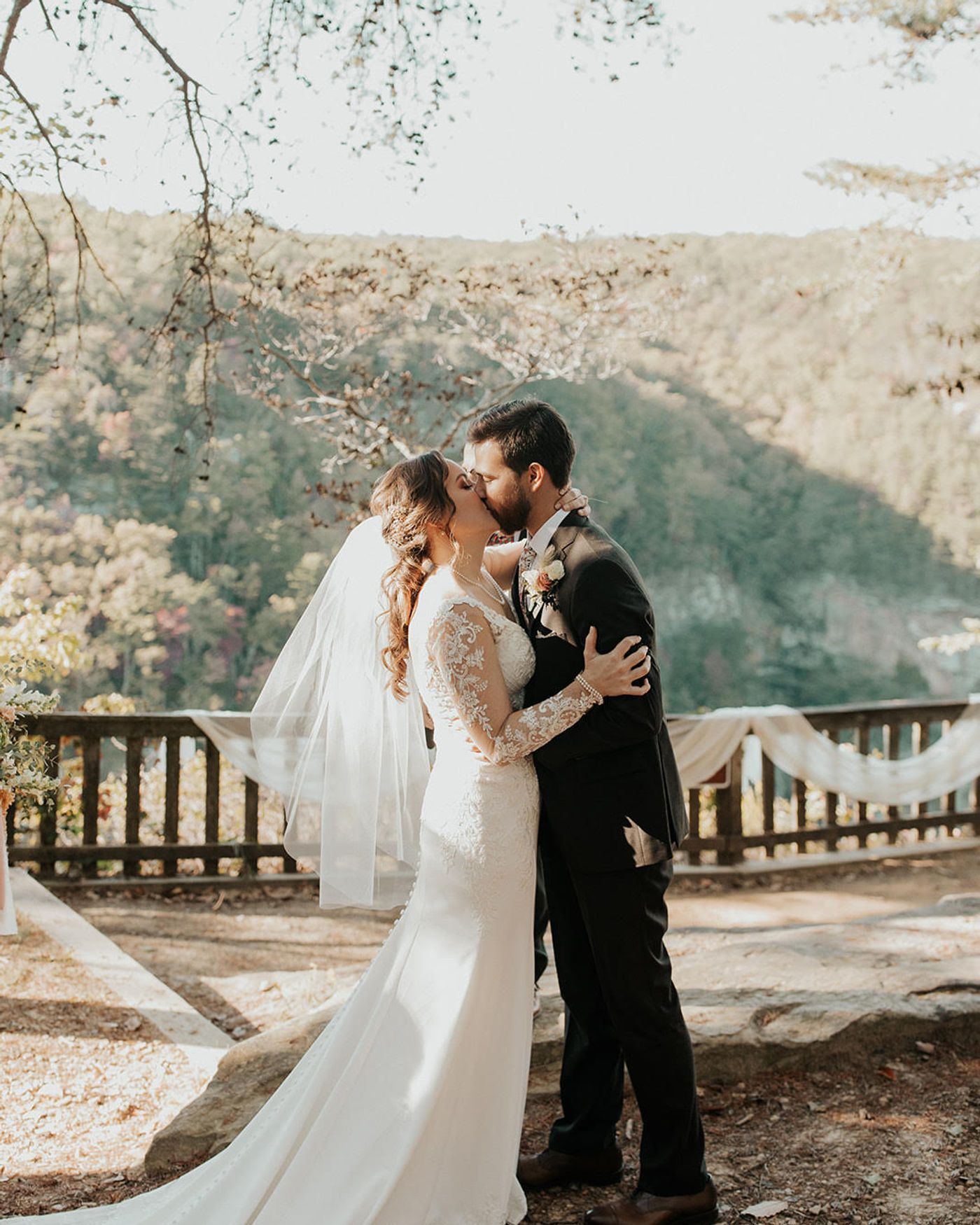
What wedding dress alterations actually involve
Almost every gown needs the same core group of changes. The hem has to come to the right length for your shoes. The bodice has to be brought in so it holds itself up without you thinking about it. The train has to be bustled so you can dance. Everything after that depends on your gown and your body.
- Hemming. Measured from the shoes you will actually wear. Layered skirts are hemmed layer by layer; lace hems are cut and the lace re-applied so the scalloped edge survives; horsehair braid is replaced rather than shortened.
- Bustling. American, French or ballroom, chosen for your fabric and train, not for whichever is quickest.
- Taking in the bodice, waist and hips. Done through the correct seams so the beading, lace pattern and boning still line up afterwards.
- Straps, sleeves and shoulders. Shortening straps is the single most common fix for a bodice that keeps sliding down.
- Cups, boning and internal structure. Building support into the gown so you are not fighting a strapless dress all evening.
- Lining, slips and crinoline. The layers underneath have to be altered to match, or the outer layer will never sit right.
Why bridal alterations are their own craft
A wedding gown is not one garment. It is often five or six layered together: an outer fabric, a lining, a crinoline, boning, beading and lace. Each of those has to be opened, altered and closed separately. Taking in a side seam on a beaded gown means removing beadwork by hand, altering the seam, then sewing every bead back so the pattern still reads as continuous.
That is why a dry cleaner's tailor and a bridal seamstress are different trades, and why a gown that has been altered badly usually cannot be fully rescued. There is one chance to cut it correctly.
Gowns Nina takes that others turn away
- Heavily hand-beaded and sequinned gowns
- Structured corsetry and boned bodices
- Heirloom gowns from a mother or grandmother
- Gowns bought online in the wrong size
- Preloved and sample-sale gowns
- Gowns needing three or more sizes taken in
- Delicate silks, chiffon and tulle
How many fittings you should plan for
Most gowns need two to three fittings. The first is where everything is pinned and measured and you get your quote. The second checks the work and refines the fit. A third is common on heavily beaded gowns, on major restyling, or when your body changes between appointments, which is normal and nothing to apologise for.
Start looking for your seamstress as soon as the gown is ordered, and aim for a first fitting around 6 to 8 weeks before the wedding. If your date is sooner than that, call anyway. A great deal can be done in a short window, and it is always better to ask than to assume it is too late.
What it costs
Cost follows the work, not the price of the dress. A hem is one job; a hem plus a bustle plus taking in a beaded bodice is a different one entirely. Nina quotes at your first fitting, once she can see the gown on you and knows what is inside the seams. Nothing is cut and nothing is charged until you have agreed the price.
Evidence
This work, actually done
I highly recommend Nina for your bridal dress alterations. She is so kind and patient. She truly cared about making sure my dress fit comfortably and looked great!
Nina was so kind and thoughtful! Her services were excellent, and I feel like such a beautiful bride!
Questions
Wedding Dress Alterations: what brides ask
When should I schedule my wedding dress alterations?
Start looking for your seamstress as soon as your gown is ordered, and book your first fitting for roughly 6 to 8 weeks before the wedding. That leaves room for the two or three fittings most gowns need without anyone rushing. If your date is closer than that, call anyway. A lot can be done in a short window, and it is better to ask than to assume it is too late.
How many fittings will my wedding dress need?
Most gowns need two to three. The first is the fitting where everything gets pinned and measured. The second checks the work and refines the fit. A third is common for heavily beaded gowns, major restyling, or if your body changes between appointments. Simple hems sometimes need only one fitting plus a pickup.
How long do wedding dress alterations take?
It depends entirely on the work. A hem and a bustle is a different job from reconstructing a bodice or adding sleeves. Call Nina with your date and a description of your gown and she will tell you honestly what her schedule allows.
What should I bring to my first fitting?
Bring the exact shoes you plan to wear, the undergarments you will have on under the gown, and any veil or belt that affects the look. If you have not bought shoes yet, bring a pair at the same heel height. The hem is measured from your shoes, so the wrong pair means the wrong length.
What is a bustle and which type do I need?
A bustle lifts your train off the floor after the ceremony so you can walk and dance. An American (over) bustle pulls the train up onto the outside of the skirt. A French (under) bustle tucks it underneath. A ballroom bustle lifts the train flush into the hemline so the skirt looks floor-length all the way round. Which one suits you depends on the fabric, the train length and where the seams fall. Nina will show you the options on your own gown.
Can a wedding dress be taken in two sizes?
Usually yes. Two sizes down is routine on most gowns. Three or more is often possible but depends on where the seams and the beading sit. A heavily structured or fully beaded gown has limits. Bring it in and Nina will tell you what the dress can take.
Can a wedding dress be let out if it is too small?
It depends on the seam allowance the manufacturer left inside. Some gowns have generous allowances and can go up a size or more; others have almost none. There are also ways to add width with panels or a corset back. Nina can look inside the seams and tell you what is there.
Do you work on beaded and lace gowns?
Yes. Beading and lace are the reason many alterations shops turn a gown away. Beadwork is removed by hand, the seam is altered, and the beads are hand-sewn back so the pattern still reads as continuous. It takes time, and it is where decades of experience actually show.
Do you alter gowns bought online or secondhand?
Yes. Online and preloved gowns are very common now and they are welcome. They sometimes need more work than a gown bought in a salon, because the sizing was a guess rather than a measurement, but that is exactly what alterations are for.
Do you have to buy your dress from a particular shop?
No. Nina works on gowns from anywhere: any salon, any designer, online, secondhand or inherited. She has spent decades working with Atlanta bridal shops including Bridal Sense, Wedding Angels and Bride Beautiful, but you do not need to have bought your dress from any of them.
Other things Nina does
Custom Bridal Alterations & Restyling
Heirloom gowns, added sleeves, new necklines, reconstructed bodices. The work most seamstresses turn away.
Custom Veils
Made by hand to match your gown: any length, any edge, lace lifted from your own dress if you want it.
Bridesmaid Dress Alterations
Group fittings, hems that match across the whole party, and every dress finished on the same schedule.
Let’s get your gown fitting properly.
Bring the dress and the shoes. Nina will tell you exactly what it needs and what it will cost, before anything is cut.